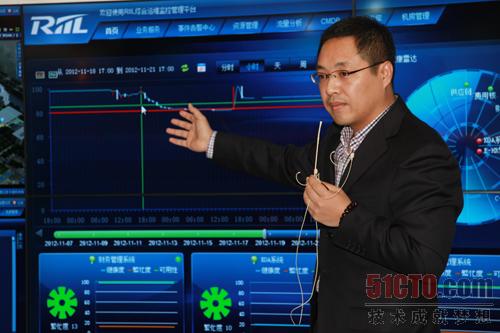
Ruijie Networks has launched a brand-new product, the RIIL IT Integrated Business Management Platform, tailored for medium-to-large industry and enterprise users. It is purpose-built to help enterprise CIOs manage corporate IT systems more effectively and unlock IT value.
According to Feng Jinyang, General Manager of the IT Operations Management Business Unit at Ruijie Networks, the RIIL IT Integrated Business Management Platform not only integrates the underlying network management business architecture and multiple monitoring modes to deliver the functions of traditional IT operations management products, but more importantly, it enables managers like enterprise CIOs to achieve efficient business operations through the effective management of IT and technical service organizations.
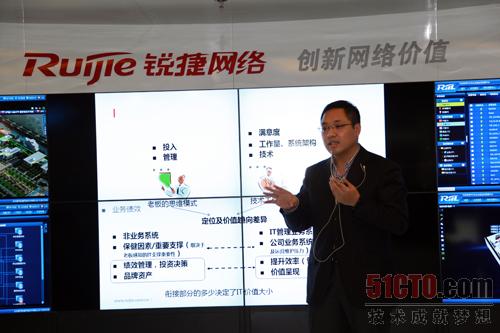
Feng Jinyang, General Manager of the IT Operations Management Business Unit, Ruijie Networks
Unlocking IT Value
Feng Jinyang stated that as an independent software management system, RIIL’s management scope already extends beyond Ruijie Networks’ own self-developed hardware devices. It is an IT industry-oriented comprehensive business software, covering typical database middleware, servers, and network equipment, as well as products from other vendors. As a leading domestic vendor in the network equipment field, Ruijie Networks has always focused on enterprise IT network construction. Starting from 2009, while serving customers, Ruijie Networks noticed a trend: customers no longer simply needed vendors to maintain their own products; instead, they were more concerned about how to manage their entire network well. This sparked the hope for a one-stop integrated service. Building on this, Ruijie Networks extended beyond its original business scope and, based on its accumulated expertise, developed the RIIL IT Integrated Business Management solution.
The core philosophy behind the birth of RIIL is “Unlocking IT Value.” Under this concept, enterprise IT investments can truly deliver their deserved value. For example, it is like a refrigerator at home: its purchase price does not represent its value; what matters is the practical value it demonstrates in daily life use. The same applies to IT construction. If millions of dollars invested fail to produce corresponding value in future use, then that expense can only be seen as waste. Therefore, “Unlocking IT Value” means letting the funds users invest in IT construction truly release their due energy.
The Perception Gap Between CEO and CIO
As corporate managers, differing positions, career development paths, and future directions lead to different thinking models. What is the result? As you can imagine, different thinking models and different goals ultimately lead to struggles in work progress.
In an enterprise, the CEO’s mind typically focuses on inputs, outputs, and organizational management techniques, while the CIO focuses on product satisfaction, system architecture, and technological leadership. This ultimately leads to differing views and value assessments on the same matter between the two individuals.
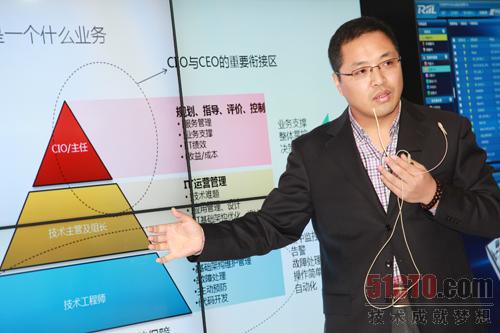
For example, the IT operations management system we are discussing today is a business system for the IT department. In other words, for handling business faults or monitoring and managing equipment, the IT department needs a core business system to assist; this system is its business system. However, for the boss, this is not a business system; the boss’s business systems are ERP and CRM. So, this is a difference in understanding.
Secondly, we IT managers all believe that implementing an IT operations system can provide critical assurance for the company’s business systems, making them more stable, which is a necessary demand. Yet, in front of the boss, he perceives this system as a hygiene factor鈥攄ispensable. This is a difference in their perception.
Furthermore, IT managers believe that an operations system can improve efficiency鈥攆or example, by quickly locating and resolving faults, and tracking the timeliness and workload of employee problem-solving. This level somewhat aligns with the boss’s perspective. Therefore, from the standpoint of overall departmental operational performance and employee status, business management and technical management converge to some extent.
The Key Drivers of IT Operations Value
How should one understand the word “value”? We need to look at it from three aspects:
The first level is value assurance鈥攑roviding fundamental value. If an employee cannot deliver their required functional value, then there is no need for them to stay. For a network, basic network operation is its own value.
The second level is value measurement. Talking without practicing is empty show, but practicing without talking is foolish show. Only by being able to both talk and practice can you truly demonstrate value, letting others perceive and feel it.
The third level is how to solve the value alignment problem between the IT department and business departments. The consequence of not solving the alignment problem is that my employees do the same work with the same efficiency, which not only impacts individual productivity but also greatly affects the organization. From the perspective of sustainable concepts, business will not be able to continue developing. For example, if I, as an enterprise IT department head, seek an investment increase of millions without being able to justify it clearly, I will not be able to get things done. This is the importance of alignment.
Target User Groups and Differentiation from Other Products
The biggest difference between RIIL and other operations products is that it aims to meet the needs of three types of users. The first type consists of IT technical engineers performing underlying enterprise operations and maintenance, responsible for the operation and maintenance of basic products. The second type consists of their supervisors and senior technical engineers, responsible for supporting and assisting product operations. The third type is the CIO or IT management personnel. As high-level enterprise planners, they make decisions on multiple matters including the direction of enterprise architecture and operations. These three user types are the ones the Ruijie Networks RIIL platform cares most about and focuses on, but given their different job functions, the features they use also vary.
Compared to other operations management software, there is not much difference at the underlying level. For monitoring network equipment and database server portions, the implementation principles are the same, so there is no significant difference. At a higher management level, however, there are some differences. Ruijie Networks chooses to focus from the CIO’s IT management perspective. That is to say, the same data, presented in what form and organization manner for whom, differs.
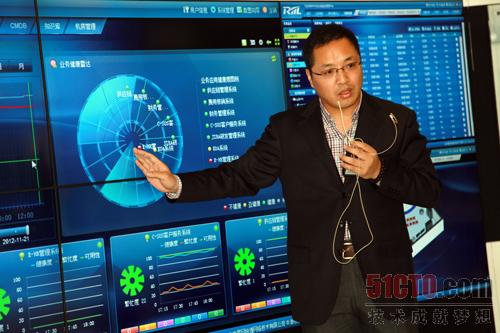
To achieve relevant effects in business, one must analyze from the industry infrastructure perspective. Actually, the principle is simple. First, look at the organization. Regardless of its industry type, it’s the same. For example, Alibaba, manufacturing industries, and government sectors differ in business. Alibaba depends on IT, so its business point is continuity. Product manufacturing and line-off in the manufacturing industry are also continuous. But one type of industry is different鈥攖he information and consulting industry. Even if IT services are interrupted, its projects and consulting will not stop. The manufacturing industry is different; once IT stops, manufacturing stops, so this business is closely tied to its business. Second, look at what happens when a business interruption occurs. What is the degree of impact? How quickly does the problem need to be solved? What happens if support is inadequate? These are the issues that concern the boss and the CIO.
Manpower also faces similar problems. First is understaffing, second is insufficient technical support, and third is what the management requirements are. This refers to what the CEO and CIO’s management needs are鈥攕tability or satisfaction levels. If problems occur in these areas, what impact will they bring to the company?