
As data center consolidation becomes the trend in enterprise IT development and cloud computing gradually becomes a reality, as an organization鈥檚 IT director, are you feeling the overwhelming pressure of operations and maintenance?
The Dilemma for Enterprise IT Managers
Indeed, facing increasingly large and complex data centers, any IT manager likely feels somewhat overwhelmed by the operations and maintenance workload. It is not a matter of lacking technical expertise, but rather a limitation of personal energy and the impossibility of single-handedly managing and controlling an ever-growing data center.
On the other hand, due to budget constraints, most funds have already been invested in data center construction, upgrades, and system development, making it difficult to request additional headcount from leadership. Even if a suitable operations team is newly hired, there is always a sense of being short-staffed because the data center grows too fast. The growth of personnel always lags behind the actual growth of the IT platform, and the gap between them is widening. Thus, the conflict between explosive IT growth and the limited energy of management personnel has become a major challenge for enterprise IT managers.
The reason humans are the most intelligent of all species is our amazing ability to adapt to and reshape our environment. The explosive growth of IT forces IT managers to constantly learn new management methods, use new management tools, and adopt new solutions. As a result, elements like the ITIL framework, ITSM systems, and other related concepts have been heavily promoted by numerous service providers and the media, and more and more enterprise users are beginning to pay attention to these elements.
However, many enterprise IT managers often have a lingering doubt: what value can these concepts and solutions truly bring us? Can they really solve my problems?
Identify User Needs and Transform Them into Value
In reality, whether it is ITIL, ITSM, or BSM, they are essentially methodologies. Methodologies emphasize generalized, universal problem-solving approaches. When these approaches encounter specific problems, it is often necessary for the executors to transform them into solutions tailored to their specific needs. This requires enterprise IT managers to not only understand ITIL and related knowledge but also apply it flexibly according to their own characteristics. Similarly, IT operations solution providers need to decompose and implement methods like ITSM based on the unique characteristics of different users.
However, for the vast majority of users, they can feel the difficulties brought about by enterprise IT operations, but pinpointing exactly where the difficulties come from and how to break them down to solve them often leaves them confused. This is like a patient who knows they are unwell but needs a doctor’s professional diagnosis to determine the underlying cause. The role of this “doctor” should be played by the IT operations solution provider and their solutions.
Before writing this article, the author specifically interviewed Yann Lejas, Technical Director for Northeast Asia at Kaseya, an internationally leading IT operations solution provider. During the interview, Yann Lejas mentioned: ITIL, ITSM, and other concepts are excellent methodologies, but user needs vary. Some customers want to try methods like ITSM, while a large portion of users currently have simpler needs that do not require a complete, process-driven methodology like ITSM. Therefore, Kaseya’s principle is to fully understand user needs and, based on those needs, provide the most suitable operations solution. If a user wishes to solve their problems through methods like ITSM or BSM, we will provide a suitable solution. And when a user does not wish to try ITIL, Kaseya also has suitable solutions for them. The key issue is analyzing, understanding, and grasping user needs before each service delivery. Part of the user’s needs comes from their description, but a significant portion comes from Kaseya’s analysis after engaging with the user.
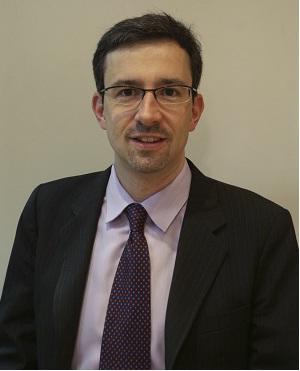
Kaseya Northeast Asia Technical Director Yann Lejas
Meanwhile, Yann Lejas also pointed out that traditional IT operations solutions can typically be divided into three layers from a technical architecture perspective: bottom-layer data collection, middle-layer data analysis, and top-layer data presentation. However, Kaseya believes that above the top-layer data presentation, one more layer should be added, which Kaseya calls the “Problem Resolution Layer.” This means an excellent IT operations solution should constantly monitor the IT infrastructure. When an issue occurs, it should provide instant alerts, but after the alert, for some common problems, it should be capable of effectively and automatically dispatching and executing fault-fix strategies. This requires two aspects of technology: first, fault analysis based on fault localization; and second, once the fault is accurately analyzed, having pre-established response strategies for automated dispatch.
Kaseya believes that users’ IT operations needs are not limited to IT monitoring and management; the need for automated IT troubleshooting is equally