

With password-based authentication so prevalent, you may need a password management tool. There are various options varying in complexity, UI, and target environment. For example, there are GUI-based password managers likeKeePass(X)。

For those who prefer CLI over GUI, I will explain how to use passto manage passwords,a simple command-line password management tool.。
This tool is actually a shell script frontend calling tools like gpg, pwgen, git, and xsel to manage passwords with OpenPGP. Each password is encrypted with gpg and stored in a local password store. Passwords can be accessed via terminal or auto-clearing clipboard.
It is very flexible and easy to use. Store each password in an OpenPGP-protected text file, organized into categories. It supports bash autocompletion with TAB for commands or long password names.
Install pass on Linux
Install pass on Debian, Ubuntu, or Linux Mint:
- $ sudo apt–get install pass
- $ echo “source /etc/bash_completion.d/password-store” >> ~/.bashrc
Install pass on Fedora:
- $ sudo yum install pass
- $ echo “source /etc/bash_completion.d/password-store” >> ~/.bashrc
Install pass on CentOS: firstenable the EPEL repository, then run:
- $ sudo yum install pass
- $ echo “source /etc/bash_completion.d/password-store” >> ~/.bashrc
Install pass on Arch Linux:
- $ sudo pac –S pass
- $ echo “source /etc/bash_completion.d/password-store” >> ~/.bashrc
Initialize Local Password Store
Before using pass, initialize it by creating a GPG key pair (if you do not have one) and a local password store.
First, create a GPG key pair (public/private). Skip if you already have one.
- $ gpg —gen–key
You will be prompted; accept defaults if unsure. Create a passphrase – your master password. The key pair is stored in ~/.gnupg directory.
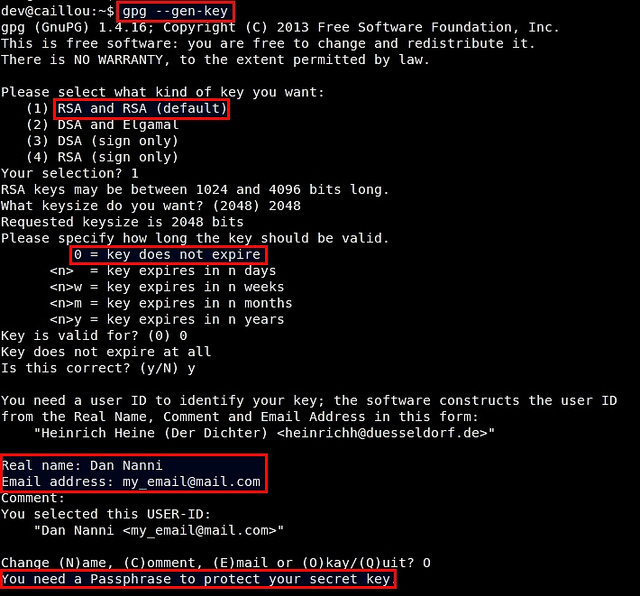
Next, initialize the local password store. Enter the email associated with your GPG key:
- $ pass init <gpg–id>
This creates a password store in ~/.password-store.
Manage Passwords with pass in Terminal
Insert New Password
To insert a new password into the store:
- $ pass insert <password–name>
is a unique name, optionally hierarchical (e.g., “finance/tdbank”, “online/gmail.com”). Passwords are stored in corresponding subdirectories under ~/.password-store.
Use the -m option for multi-line passwords. Enter in any format and press Ctrl+D to finish.
- $ pass insert <password–name> –m
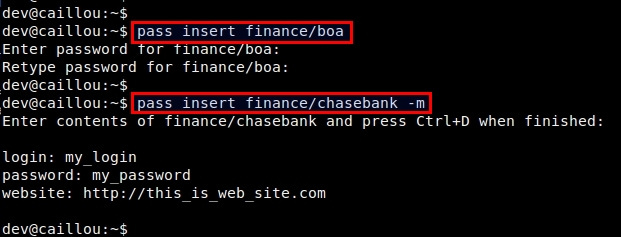
List All Password Names
To list all stored password names, simply enter “pass”:
- $ pass
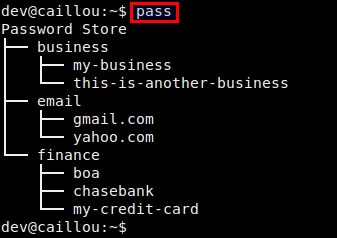
Retrieve Password from Store
To access a specific password:
- $ pass <password–name>
Example:
- $ pass email/gmail.com
will prompt for your passphrase to unlock the key.
To copy password to clipboard instead of displaying it:
- $ pass –c email/gmail.com
The clipboard is automatically cleared after 45 seconds.
Generate and Store New Password
You can also generate a random password. pass uses pwgen for this. Specify the length and whether to include symbols.
For example, generate a 10-character password without symbols:
- $ pass generate email/new_service.com 10 –n
Remove Password
Removing an existing password is easy:
- $ pass rm email/gmail.com
In summary, pass is flexible, portable, and easy to use. For those seeking a simple, effective, secure CLI-based password manager, I highly recommend pass.
via: http://xmodulo.com/2014/05/manage-passwords-command-line-linux.html